Porsche Mission S revealed in New York: a mid-engined super sports car platform above the 911
Porsche pulled the cover off the Mission S on a Queens pier on October 15. It's a design study for a permanent mid-engined model line above the 911, with a 917-style cooling fan, 928-style wheels and no center screen. Engine, power and price are still unannounced, but CEO Michael Leiters says it will offer gasoline, hybrid or plug-in power, no EV, could take a manual or PDK, and will cost 'much more' than a 911.
By Exotic Car TrendsPublished Updated 10 min read
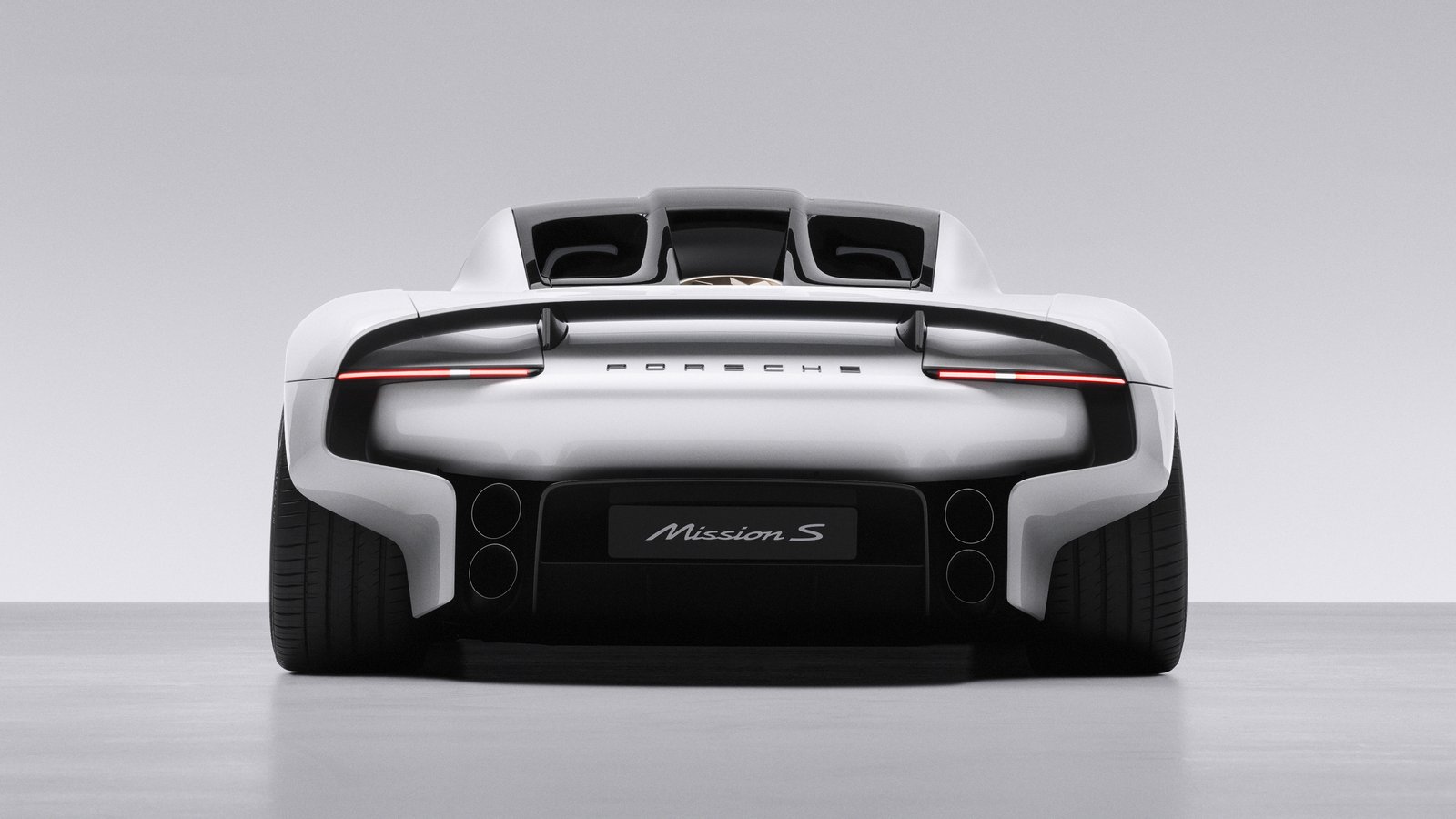
The Mission S vision model from behind. The rear deck frames a cooling fan that Porsche says nods to the 917. Credit: Photo: Porsche
Porsche has shown the car it wants to sit above the 911. The Mission S, unveiled on October 15 on a pier in Queens, New York, is a white mid-engined concept, which Porsche calls a vision model, that previews both a new design language and, more importantly, a new tier of Porsche: a super sports car platform that the company says will be a permanent part of the range, not a one-off hypercar. Porsche didn't announce an engine, power figure, price or launch date, though CEO Michael Leiters told Bloomberg TV the car will cost 'much more' than a 911.
For buyers, the headline is in what CEO Michael Leiters said rather than what the car showed. In Porsche's reveal release, he describes the Mission S as a mid-engined super sports car platform 'positioned above the 911 – not as a one-off hypercar, but as a permanent and versatile addition to our customer offering.' That confirms what Top Gear reported last week and sets the Mission S apart from the Carrera GT and 918 Spyder, which were limited runs.
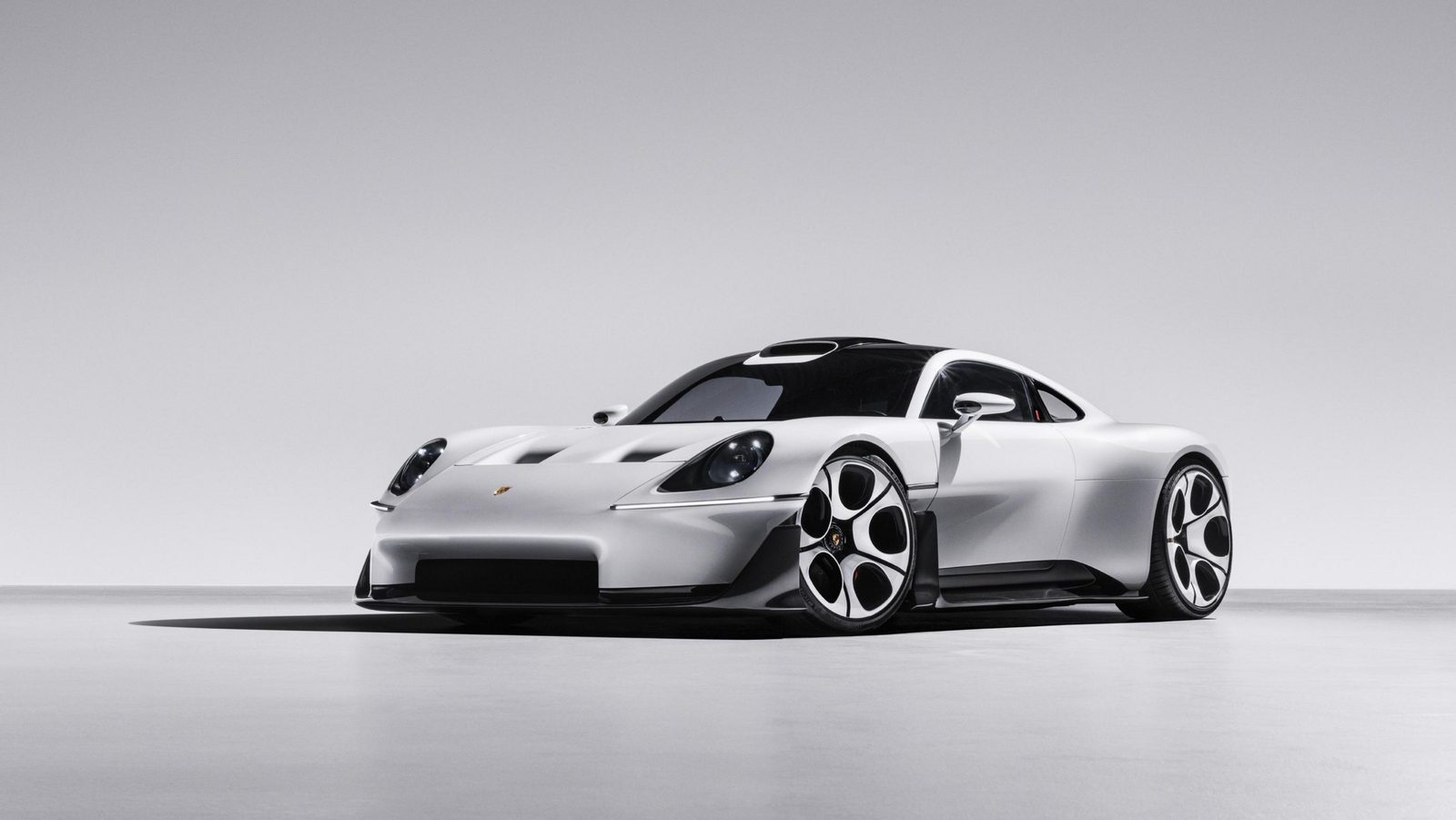
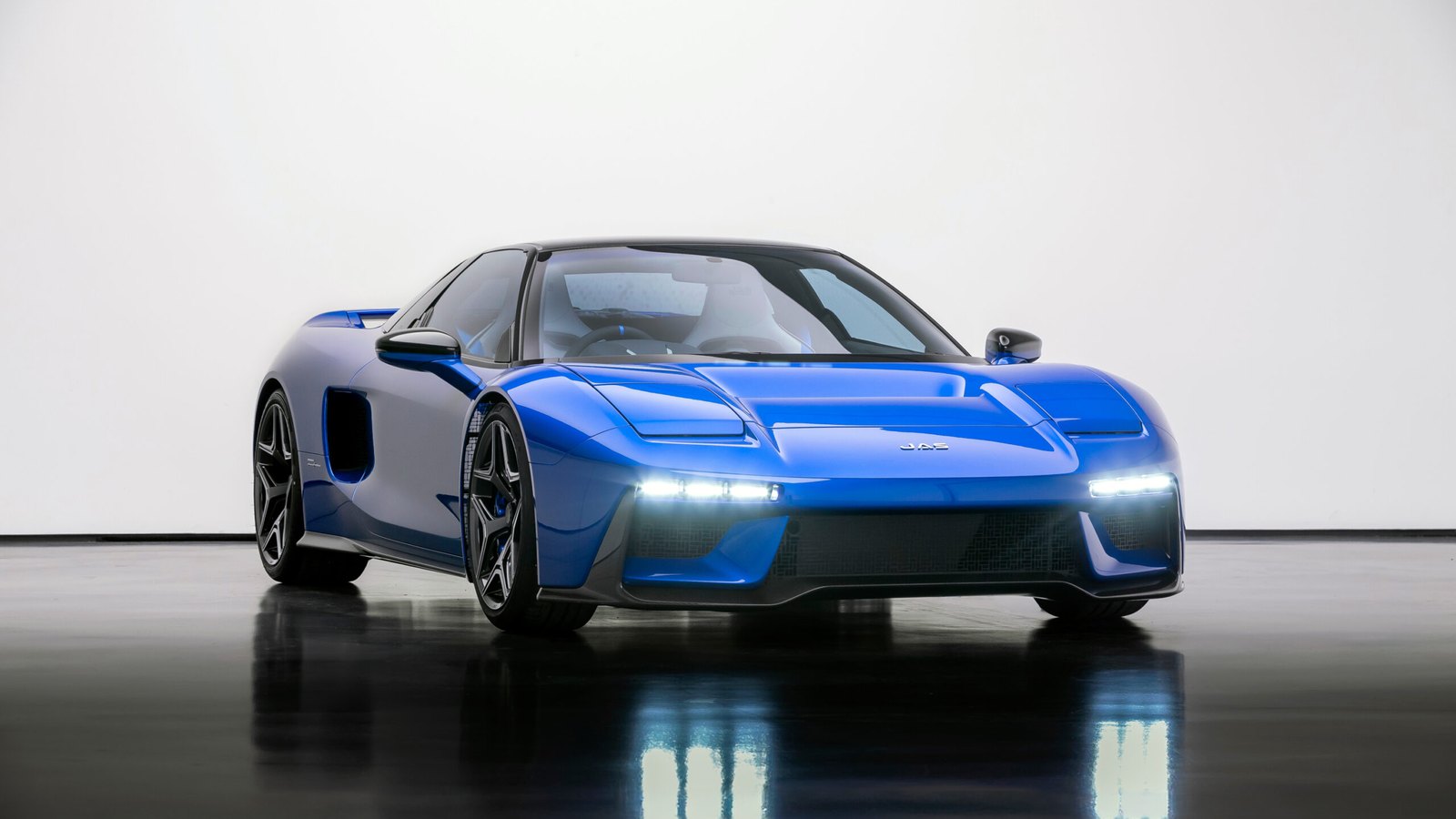
The Mission S from the front three-quarter: round 911-style headlights, a flat GT1-inspired nose and a cabin set well forward. Credit: Photo: Porsche
Where and why New York
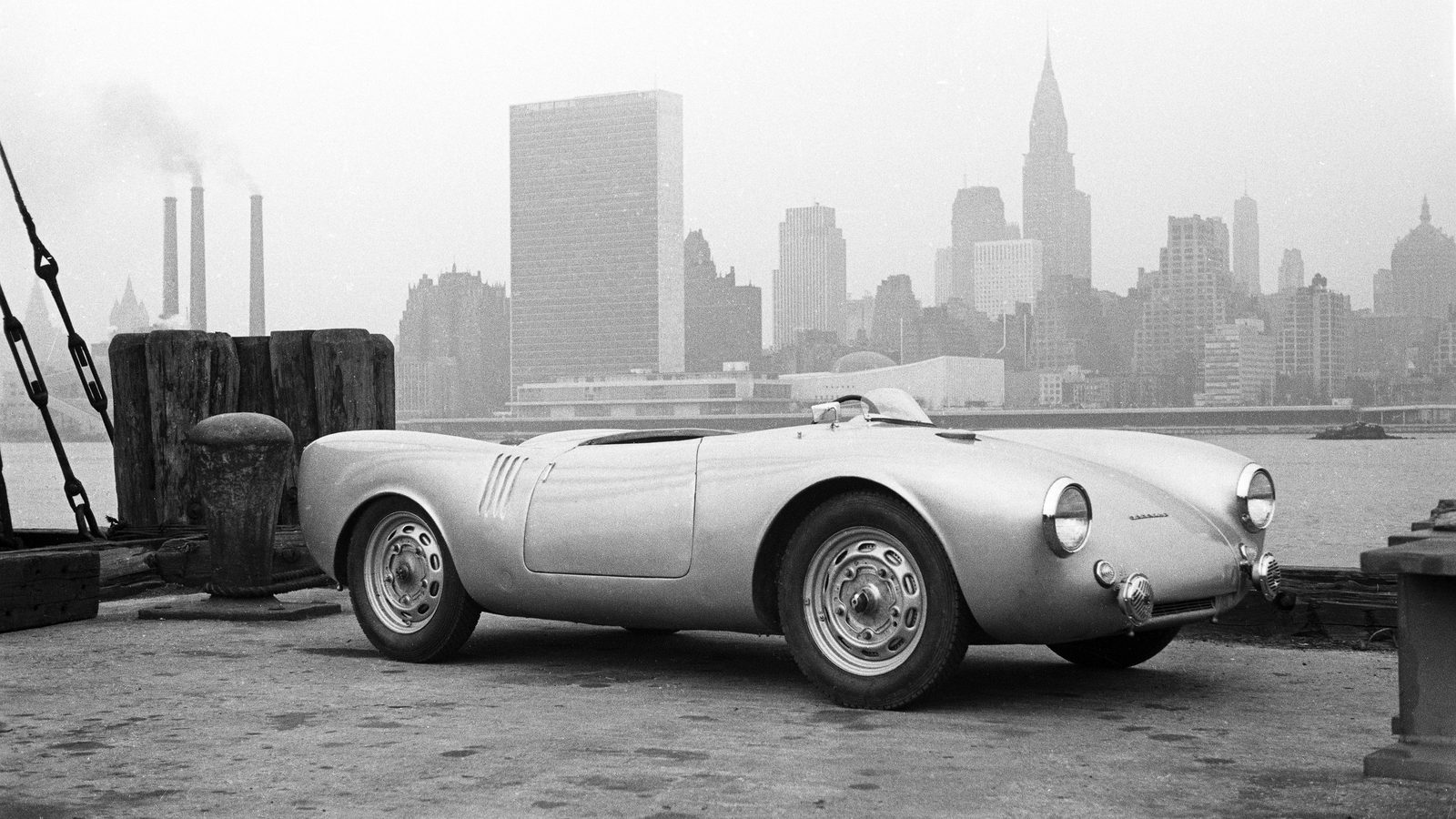
Porsche picked the location for its history. The company says the first photos of the mid-engined 550 Spyder were taken on this same Queens pier in 1953, and it calls the 550 its first super sports car and an early foundation of its success in the US. The reveal is part of 'Sportwagenschmiede '35', the strategy Leiters presented on October 7, which we covered in Porsche's reset under Michael Leiters.
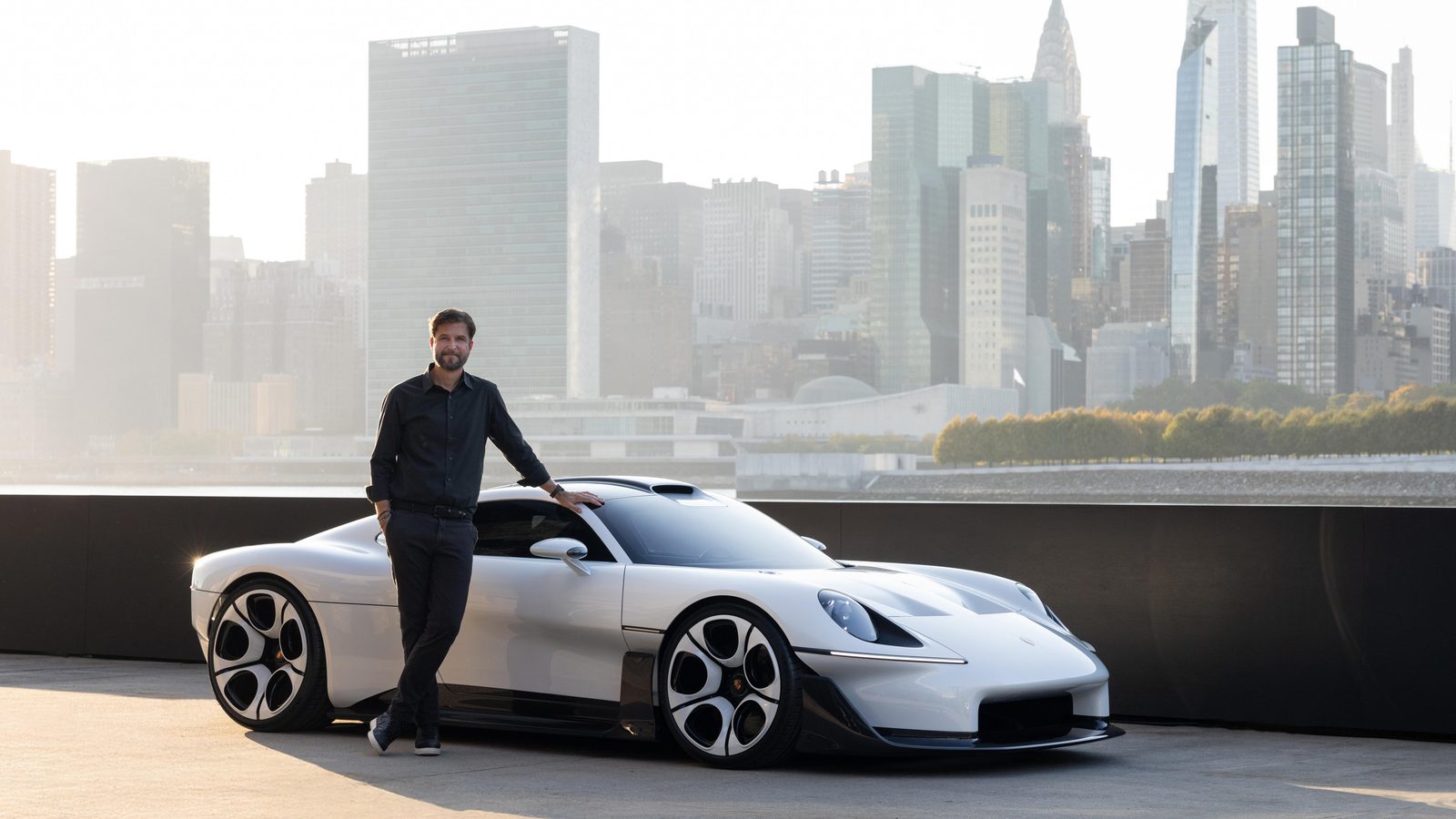
Head of Style Tobias Sühlmann with the Mission S on the New York waterfront, Manhattan across the river. Credit: Photo: PorscheHeritage shot, not the Mission S: a Porsche 550 Spyder on the same New York pier in 1953, which is why Porsche picked the spot for the reveal. Credit: Photo: Porsche
The design: a greatest-hits list, reworked
Head of Style Tobias Sühlmann, who followed Leiters from McLaren, says the Mission S illustrates a direction Porsche 'will soon be translating into our future product portfolio.' The car borrows openly from Porsche's past, and the release names the sources:
Round headlights and torpedo-shaped front fenders that echo the 911.
Shut lines that run into the light graphics, a nod to the G-model 911.
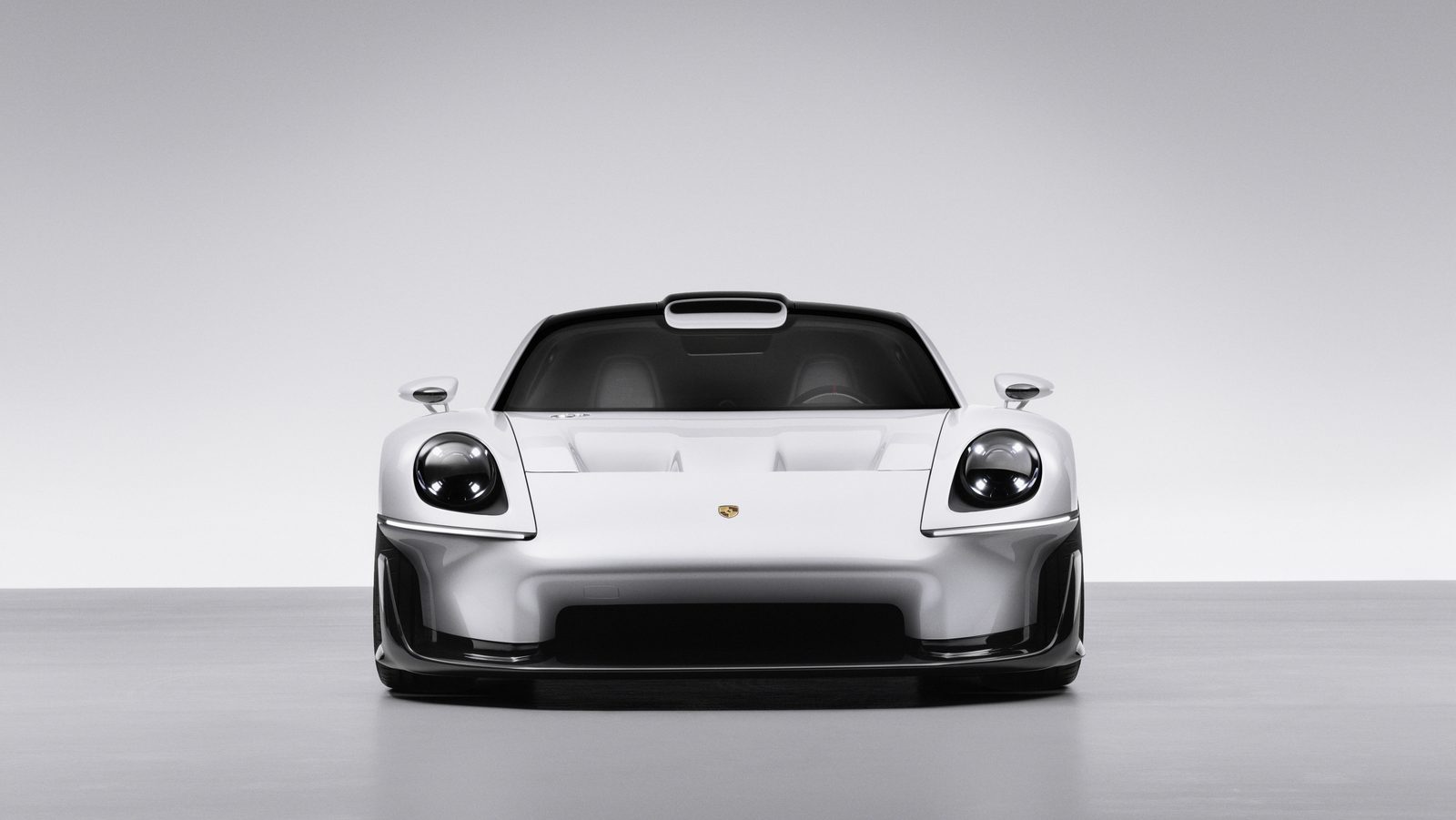
A flat front taken from the 911 GT1, and a 'car-in-car' rear concept also derived from the GT1.
A roofline beneath the rear wing that recalls the 959 and runs all the way to the tail.
A visible cooling fan at the rear, which Porsche links to the radiator fan of the 917 race car.
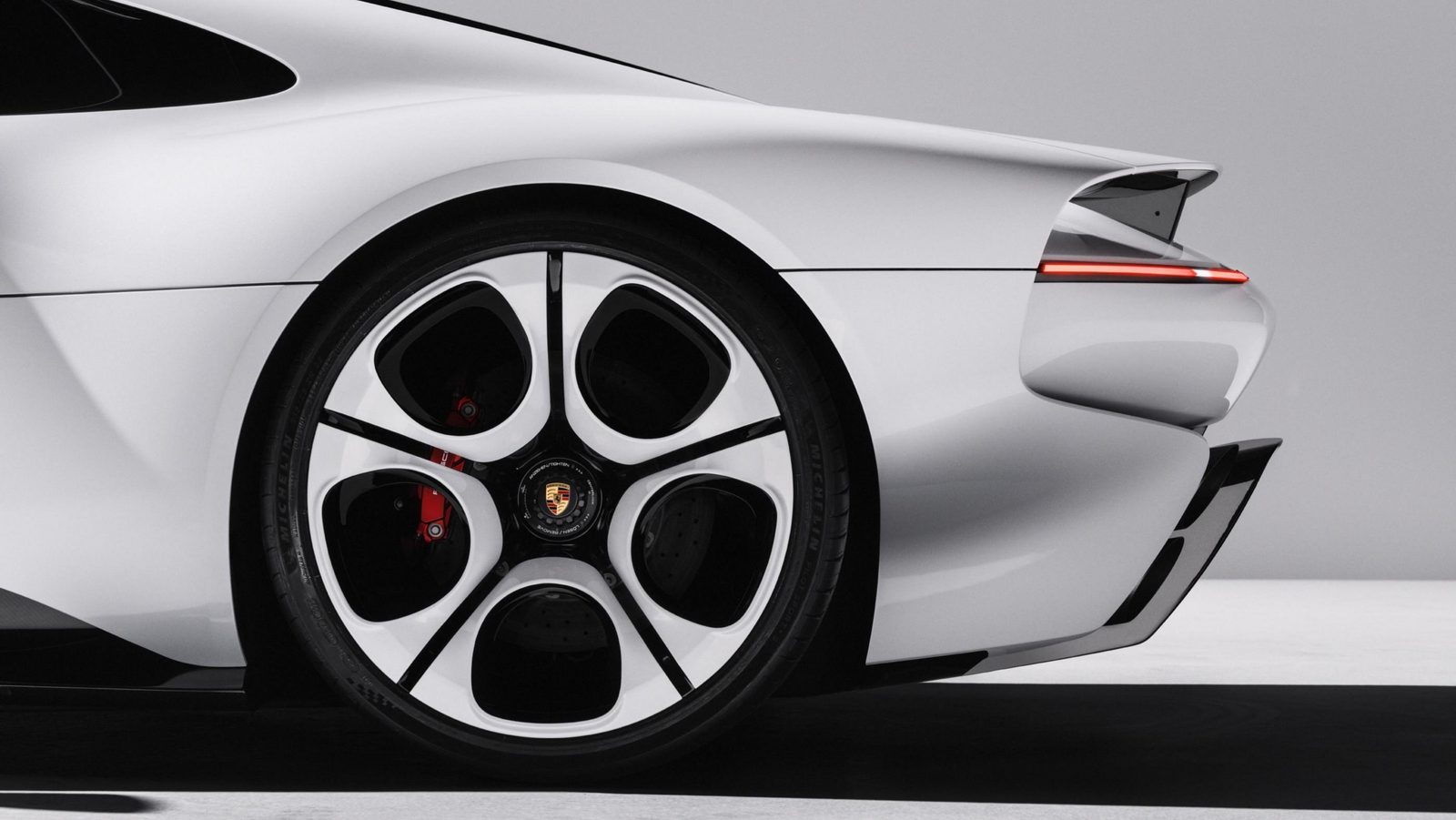
Wheels based on the 928's 'dial' design, reworked for low weight.
A fully integrated active rear wing and a wraparound line that connects the front and rear lights.
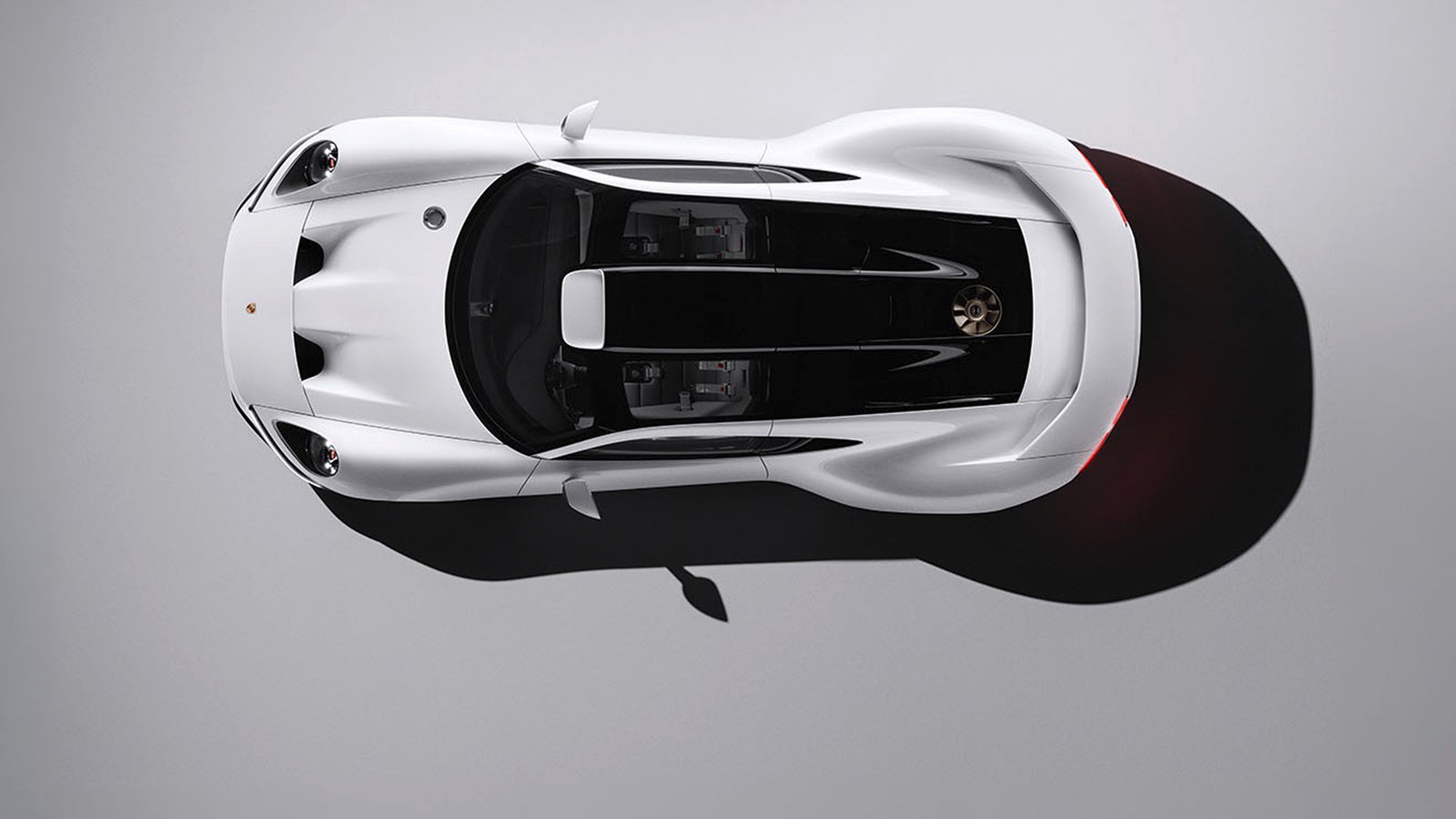
Head-on, the flat nose and twin round headlights are the clearest links to the 911 GT1 and the 911. Credit: Photo: PorscheFrom above, the cabin sits well forward of the engine bay and the 917-inspired fan. Credit: Photo: Porsche
The show car's colors are new too: Firn White Metallic and Light Red Metallic outside, with Black Chrome and Special Black inside. Porsche says they reinterpret its classic motorsport white, grey and red. The overall look matches what leaked early: the video that leaked hours before the reveal, reported by Carscoops, showed the rear fan and stacked quad exhausts, and both are on the finished car.
The wheels rework the 928's 'dial' design. Above, the thin light strip runs into the rear graphics. Credit: Photo: Porsche
How it came together, and what it means for the next 911
The Mission S came together fast. Sühlmann told Car and Driver that a few months after he started in February, Leiters called him 'on a Saturday evening' and said, 'There should be a car above the 911, and it could be a mid-engine car, and let's develop some ideas.' MotorTrend puts that call roughly eight months ago, while Road & Track reports Leiters telling the media at the reveal that he approached Sühlmann six months ago. Either way, it went from idea to show car in well under a year. Sühlmann told MotorTrend he only designs things that could be built, and singled out the thin 'aero blade' lights, front and rear, as 'something that we think could be a feature in the future.' He told Car and Driver the screen-free cabin came from customers, some of whom told Porsche, 'The only screen I need is my windscreen.'
The bigger point for 911 fans is that the Mission S sets rules for every future Porsche, not just the car above the 911. Sühlmann told Car and Driver the range will be split into three groups: 'Halo' cars like the Mission S, 'Plus' models like the Cayenne, Macan and Panamera, and 'Core' cars, where 'the 911 is the center of gravity.' He has set shared design traits for all of them, namely torpedo-shaped front fenders, a fastback 'flyline' roof, a clean wraparound body line and muscular rear haunches, all taken from the 911 and the 356 before it. Autocar frames the Mission S as the heritage template for the next 911. Porsche hasn't shown or dated that car, so how closely it will follow the Mission S is still unknown.
Inside: no center screen, a red button and an aluminum key
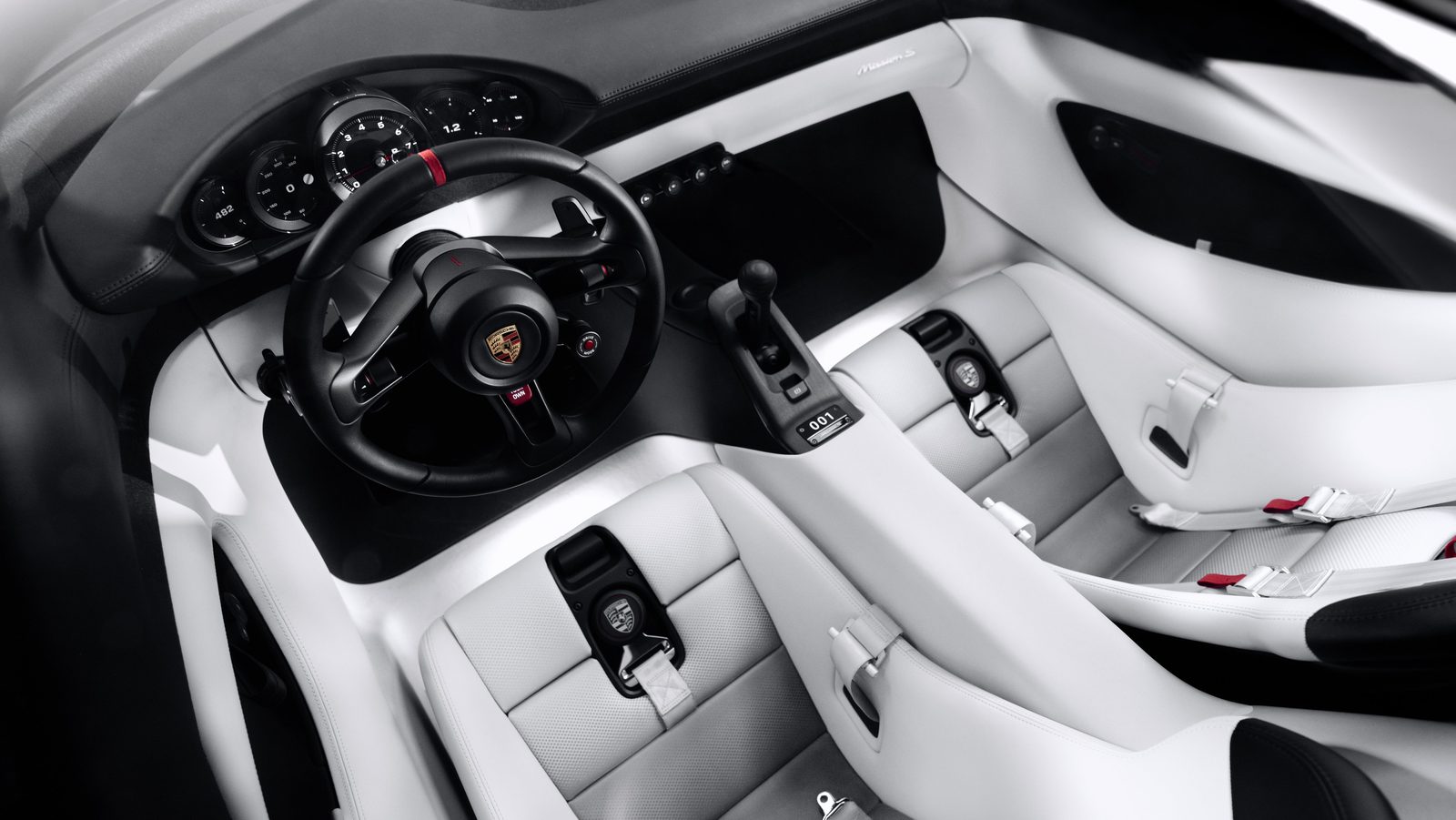
The cabin is where Porsche departs most from its current cars. There's no permanent center display and no passenger screen. Instead a retractable, MagSafe-compatible holder lets the driver's own phone act as the navigation or information display when wanted. Other details from the release and Porsche's Mission S page:
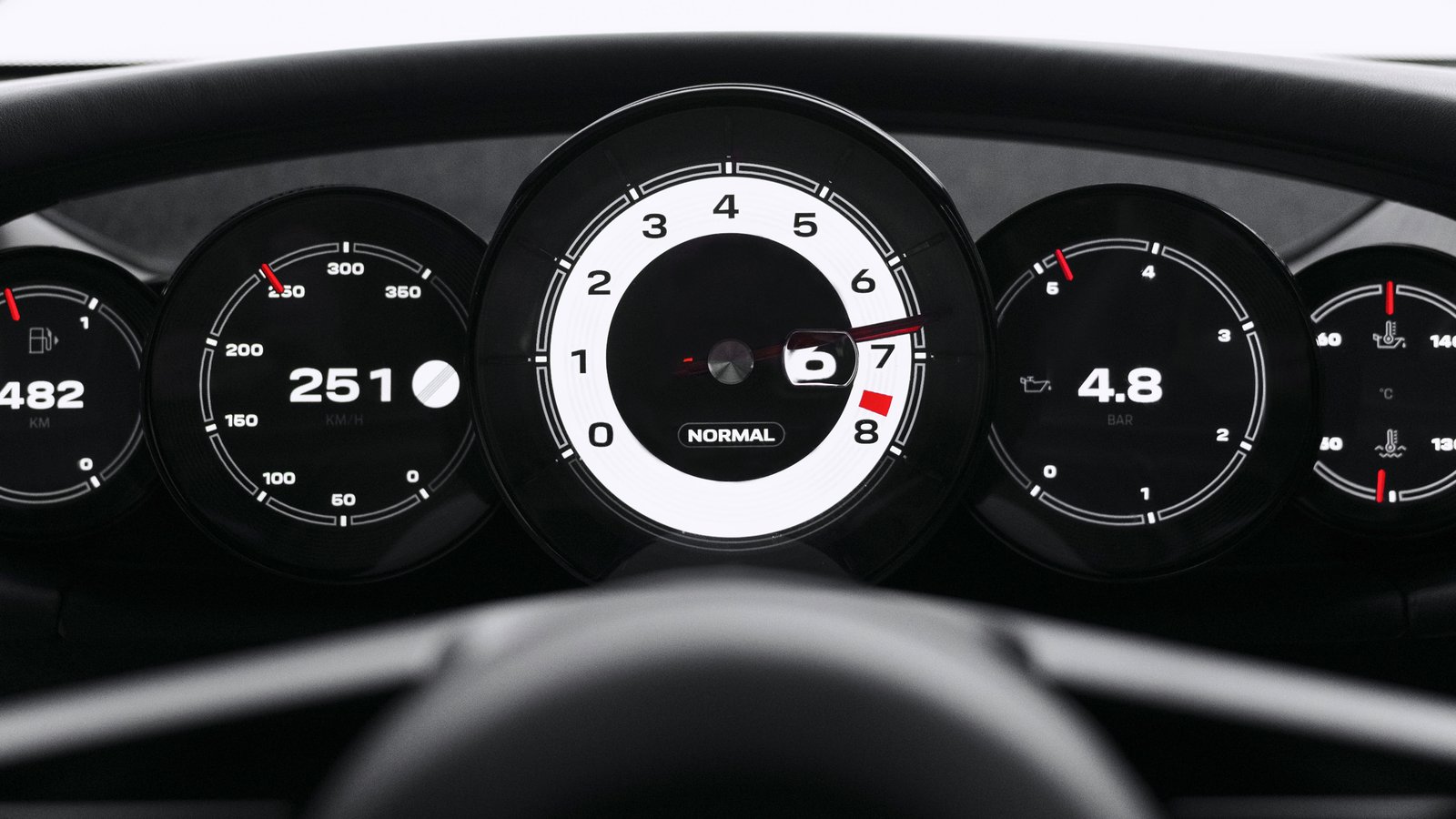
Five round instruments behind the wheel, with a digital rev counter that keeps an analog-style needle. Porsche says the dials rearrange, and the rev counter moves closer to the driver, depending on the drive mode.
An 'On your own' driving mode, a red button on the steering wheel that switches off the driver assistance systems.
A gear lever, a reworked Sport Chrono dial and push-pull controls in the dash.
An aluminum key that sits left of the steering wheel, as on other Porsches.
Seats with the seatbelt buckle built into the center bolster and relocated electric adjustment controls.
No center screen: just five round dials, a tall gear lever and seats with the belt buckle built into the middle. Credit: Photo: PorscheFive round dials, with the rev counter in the middle. Porsche says their layout changes with the drive mode. Credit: Photo: Porsche
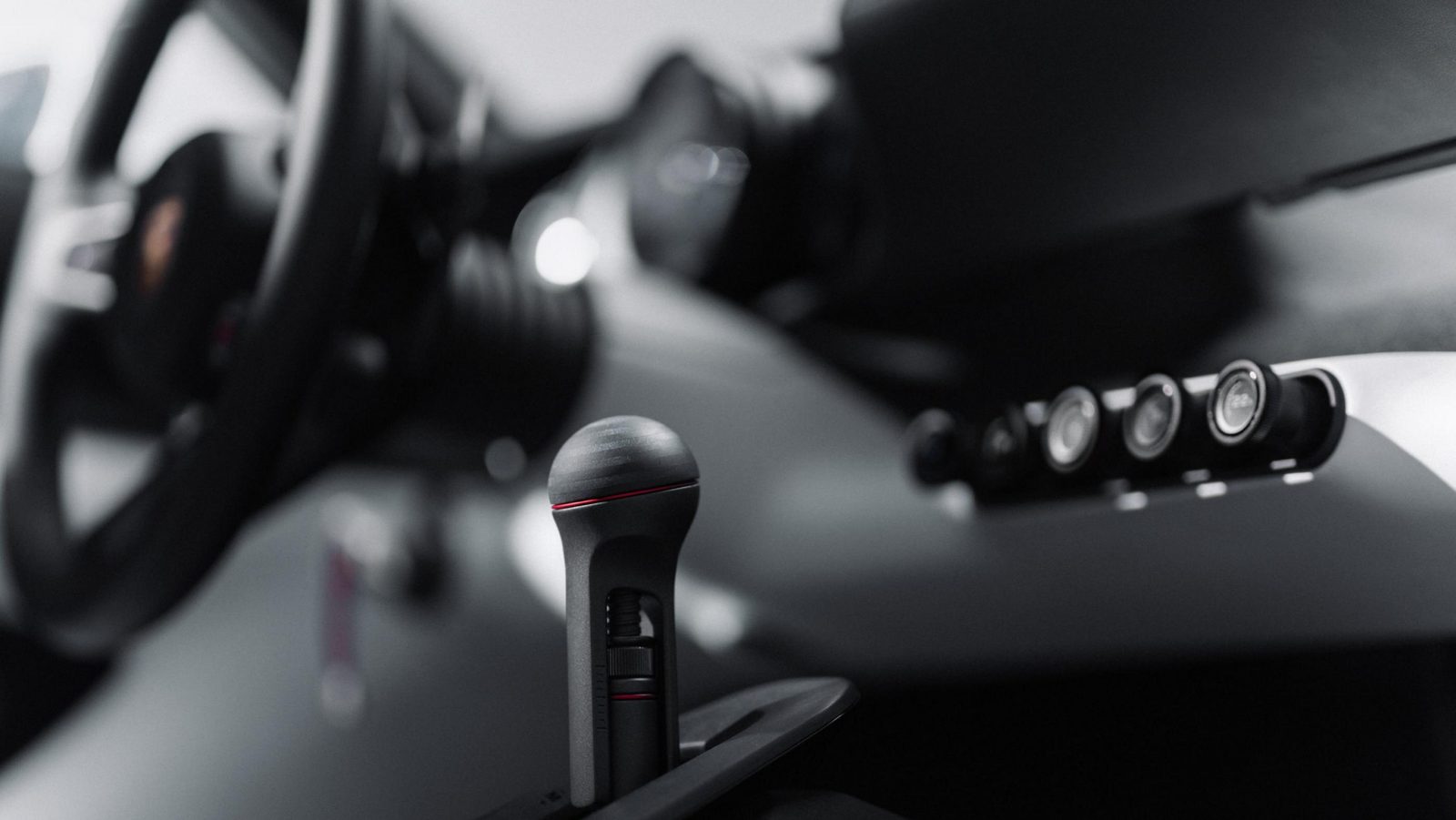
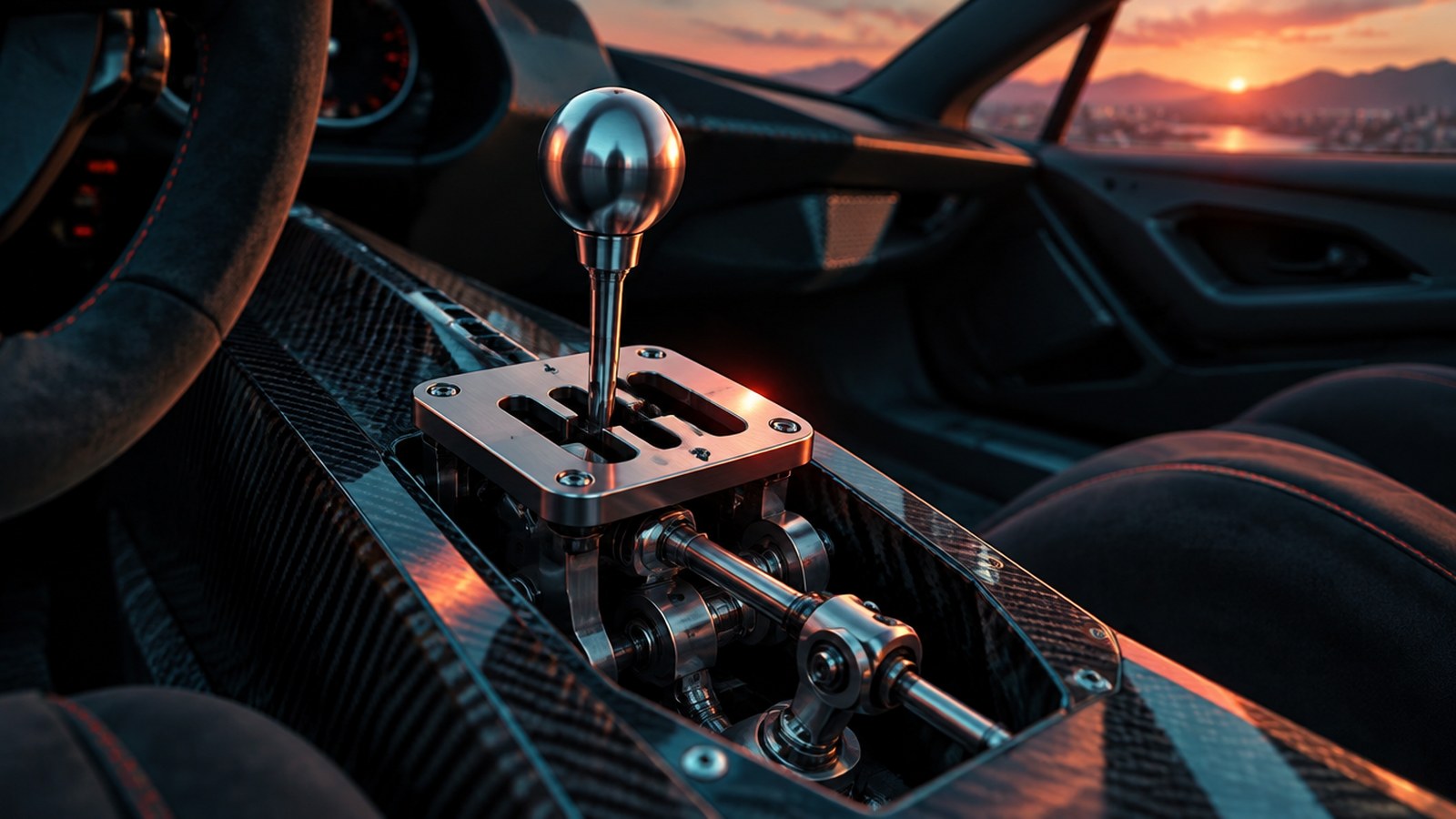
The gear lever is worth a closer look, because the gearbox question is more open than the show car suggests. Last week's teaser showed Park and Drive indicators, which pointed to Porsche's PDK dual-clutch, and T3 reports that the show car's lever selects park, reverse, neutral and drive and can be nudged forward or back to change gear, with shift paddles on the steering wheel as well. That describes a two-pedal setup. But at the reveal, Leiters said the platform can take either a PDK or a traditional manual, according to Road & Track, and when asked about a stick he said: 'Customer demand will define what we build on this platform.' The Drive points out that the show car's lever is height adjustable, an odd thing to engineer if drivers weren't meant to use it often. Outlets read the hardware differently: Car and Driver describes the concept as including a manual, while CarBuzz says the lever is laid out for an automated gearbox and expects PDK to be the main choice. What's settled is that Porsche hasn't ruled a manual out. What isn't settled is whether a road car will offer one.
The tall gear lever, with the dash's push-pull controls beyond it. Credit: Photo: Porsche
What Porsche confirmed, and what it didn't
Confirmed at the reveal: a mid-engined super sports car platform, positioned above the 911 and planned as a permanently available model line. Porsche's release says the goal is 'the highest level of engineering excellence and maximum flexibility.' After the reveal, Porsche told Car and Driver that the future model line will support pure gasoline engines as well as conventional hybrid and plug-in hybrid options, with no fully electric version. Leiters said the same thing in his own words to Auto Express and Autocar India: 'We have the flexibility in that platform to do pure ICE, hybrid and also plug-in hybrid. There won't be a BEV on that platform: there is no demand.' That replaces earlier Autocar reporting that he had framed the car as combustion-only. In a Bloomberg TV interview, reported by Bloomberg Línea, he added that it will be a model line 'with several derivatives,' and that customer demand will decide which powertrains and versions Porsche builds.
Still not confirmed: the specific engine, power, weight, price, production volume or timing. Asked by Bloomberg what will power it, Leiters said the engine is 'still a secret' but will be 'very much in line with the DNA of Porsche.' He wouldn't give a price beyond saying it will cost 'much more' than a 911. Der Spiegel says unofficial information points to around €500,000 and a launch toward the end of the decade; Porsche hasn't confirmed either, and Auto Express says Porsche wouldn't be drawn on a date, though with development cycles being cut to 30 months it expects the car before the end of the decade. When Leiters drove the car onto the stage it ran under its own power, and what it sounded like has become the main clue people are chasing. Road & Track says it sounded a lot like a boxer engine, perhaps with more cylinders than usual, and Motor1 says clips posted by people at the event sound like an eight-cylinder, which fits the most persistent rumor of a new flat-eight. Auto Bild, whose reporter was at the reveal, tells a different story: it says the show car is fitted with a six-cylinder engine taken from the 911. If that's right, the sound says little about what the production car will use. None of these claims comes from Porsche, which still hasn't named an engine. Auto Bild also expects the production car in three to four years. Reporting before the reveal disagreed on the engine layout, with Car and Driver citing rumors of a flat-eight and Automotive News reporting a V8 with a heavily modified 911-based structure. Car and Driver had named the Ferrari 849 Testarossa and McLaren 750S as likely rivals. Porsche's official Mission S video is on its preview page, and the full release and photos are in the Porsche Newsroom.
The platform underneath
Porsche's release doesn't name the platform, but Auto Express, which attended a preview with Porsche executives, reports that the production Mission S will sit on MMB, a modular mid-engined architecture that will also underpin the future 911. Porsche treats a platform as a toolbox of parts rather than one fixed structure: engines, gearboxes, hybrid systems, axles, even steering wheels and seats. Auto Express says that toolbox includes four-cylinder, V6, V8 and flat-six engines, and that the electric Boxster replacement nominally shares MMB too. R&D chief Michael Steiner told the magazine 'there are a variety of solutions we can incorporate,' from 'a very pure, lightweight' combustion sports car to one that uses performance hybrid technology, and that the body will mix materials, 'not pure aluminium or pure carbon-fibre but what fits best.' The flat-six's low height fits the Mission S's low rear deck, Auto Express notes, but that's the magazine's read, not a Porsche confirmation.
Market perspective
A permanent Porsche above the 911 will compete for the same buyers who now pay the most for 911 GT cars. Exotic Car Trends tracks about 1,200 US and Canadian 911 listings a day, and at the top of today's range the median asking prices we recorded on October 11 were roughly $511,000 for a 992 GT3 RS and $801,000 for a 991.2 GT2 RS. Those are asking prices, not sales. We'll watch whether the top end softens now that buyers know a higher tier is coming. Live numbers are on the Porsche dashboard.
Analysis
Our take
The Mission S is a statement of intent more than a product. Porsche showed the design and the philosophy, a driver-first car with fewer screens and more physical controls, and kept every number back. The most important word in the release is 'permanent'. A standing mid-engined line above the 911 is what Ferrari and McLaren build their businesses on, and it's a different bet from the limited-run Carrera GT and 918. How it's powered and what it costs will decide whether that bet works.
What happens next
Powertrain: gasoline, hybrid and plug-in hybrid are all possible, with no BEV; Leiters says customer demand will decide. The specific engine and power are still unannounced. Videos from the reveal sound like an eight-cylinder to Motor1, but Auto Bild says the show car runs a 911 six-cylinder, so treat the sound as a hint at most.
Gearbox: Leiters says the platform can take PDK or a manual, and demand will decide. Porsche hasn't confirmed a manual for the road car.
Price and timing: not announced. Leiters says it will cost 'much more' than a 911; €500,000 and an end-of-decade launch are unofficial estimates. We'll update when Porsche confirms either.
Production design: Sühlmann says the Mission S ideas will 'soon' reach Porsche's product range, and its design traits are meant to carry across the lineup, including the next 911.
Our data: we'll report how top-end 911 asking prices move in the weeks after the reveal.
Oct 18, 2026Added what the reveal-day engine sound does and doesn't tell us: Motor1's read that event videos sound like an eight-cylinder, and Auto Bild's report that the show car is fitted with a 911 six-cylinder, plus Auto Bild's three-to-four-year production estimate.
Oct 17, 2026Added Michael Leiters' comment at the reveal that the platform can take a manual or PDK, the show car's height-adjustable gear lever, and Tobias Sühlmann's interviews on how the car came together and the design rules it sets for future Porsches, including the next 911.
Oct 16, 2026Added Michael Leiters' post-reveal comments to Bloomberg TV and Auto Express (several derivatives, engine 'still a secret', price 'much more' than a 911), Auto Express reporting on the shared mid-engined platform, details of the show car's gear selector, and unofficial price and timing estimates.
Oct 15, 2026Added more official Porsche photos of the exterior and cabin.
Oct 15, 2026Added Porsche's post-reveal statement to Car and Driver that the future model line will support gasoline, hybrid and plug-in hybrid powertrains but not a fully electric version, plus links to Porsche's official video and Newsroom release.
Profit collapsed in 2025, China keeps shrinking and the new CEO wants a smaller, more exclusive Porsche. The Mission S concept, revealed October 15 in New York, is the first look at a car that sits above the 911.
Updated Oct 15, 2026 · Published Oct 7, 2026 · 9 min read
The most talked-about new supercars of 2026 share something old-fashioned: a clutch pedal. Here's what's real and what's simulated, what they cost, how few will be built, and what the market says analog cars are worth.
Paris is a heritage show this year: an 816 hp Peugeot hatch, a 500 hp electric RCZ revival, a sold-out carbon NSX rebuild from €880,000, a retro Alpine and a hybrid V6 Alfa. Show week's biggest reveal, Porsche's Mission S, happened in New York instead.
Updated Oct 18, 2026 · Published Oct 12, 2026 · 11 min read